Chapter III, Monks
Alms giving in Thailand, monks, offerings and etiquette
Who the monks are, how the morning alms round works, what you may offer and how a visitor can take part with respect.
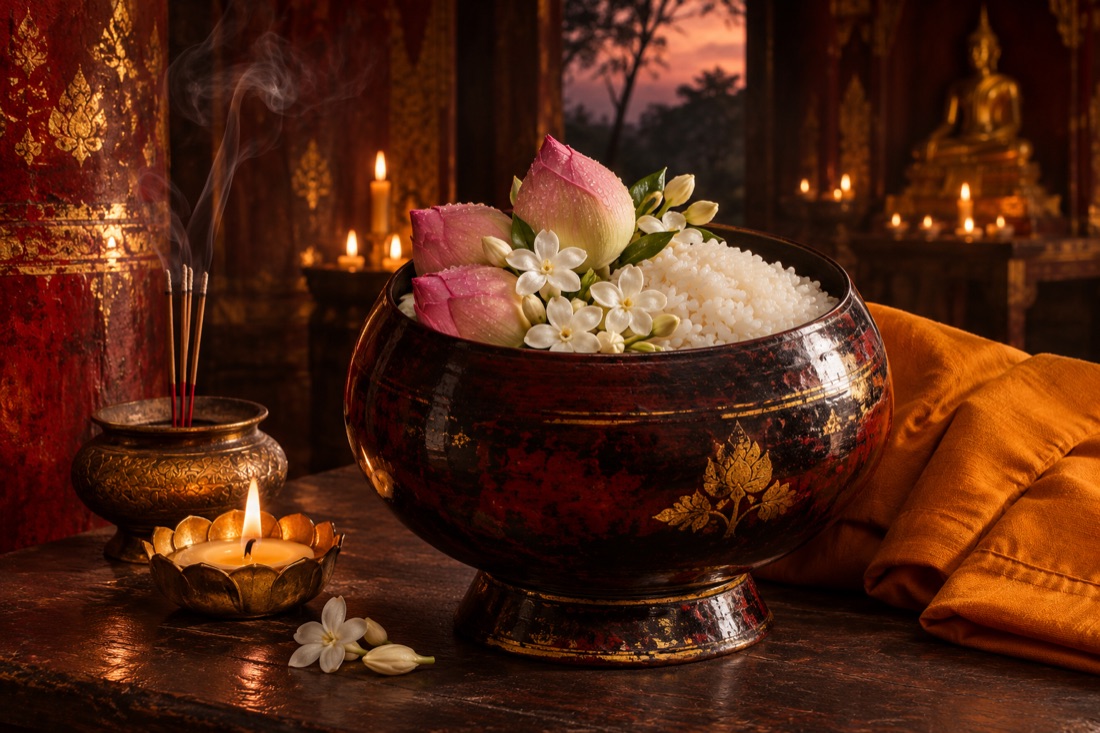
Who are Thai Buddhist monks
Thai Buddhist monks, called phra or bhikkhu, are men who have ordained into the Sangha, the monastic community, and who live by a code of discipline called the Vinaya. The Theravada school is dominant in Thailand, and its monks follow 227 rules, listed in a text known as the Patimokkha, which is recited regularly in Thai monasteries. They live in the temple, own very little, and depend on lay people for food and daily necessities.
In return, monks teach, chant, conduct ceremonies and give advice. This exchange is the heart of daily temple life. Lay people gain merit by giving; monks keep the teaching alive and offer an example of a simple life. Many Thai men ordain for a short time, a few weeks or months, and then return to ordinary life, so it is common to meet monks who are temporary members of the community.
Monk vs novice
A monk is a fully ordained bhikkhu; a novice, samanera in Pali, is a younger or newly ordained person who follows ten precepts rather than the full set of monastic rules. Novices shave their heads and wear the same robes as monks. They are often teenagers or boys who study at the temple school. Full ordination, traditionally from the age of twenty, brings the 227 rules.
The question can a Buddhist monk have a wife has a short answer: no. Celibacy is part of the monastic discipline. A monk who wishes to marry leaves the Sangha, which is called disrobing. Disrobing is accepted in Thailand and carries no stigma in itself, which is why temporary ordination is so common.
If you are curious about the daily schedule, the answer to buddhist monk daily routine is that the day starts before dawn with chanting and meditation, includes the morning alms round and a meal eaten before noon, and continues with study, work around the temple and evening chanting. The exact timetable depends on the temple, and forest monasteries keep a stricter routine than city temples. The question of how many hours monks sleep has no single answer, but a day that begins before sunrise and ends in the evening leaves a shorter night than most visitors are used to.
What is alms giving (tak bat)
Alms giving, known in Thai as tak bat, is the practice of placing food and daily necessities into the bowls of monks, usually in the early morning before sunrise. It is the oldest form of giving in the Buddhist tradition: monks do not cook or buy their food but receive what lay people offer. Giving is a way of making merit, known as tham bun, and monks answer with a brief blessing.
Morning alms round
On the morning alms round, monks walk barefoot and silently along a set route in the street or village, carrying a bowl. They do not ask for anything and they do not speak to the people who give. Lay people wait at the roadside, often kneeling or standing with a tray or bag of food, and place their offering in the bowl as the monk passes. The ceremony is quiet and brief. The answer to how to give alms in Thailand is therefore to find a monk on his round, prepare food in advance, and follow the local people.
The alms ceremony is not a performance. In some tourist areas, sellers set up stalls with ready-made food sets and invite visitors to take part. It is better to take part only where local people also give, to buy food from a regular market stall rather than from someone who pressures you, and to treat the monks as people on a daily duty and not as a photo opportunity. Do not block the road, do not use flash, and do not walk beside the monks taking photographs.
What can you offer
You can offer cooked food, drinks, fruit and daily necessities such as soap, toothpaste or medicine, as well as robes and candles at the temple. Monks eat only before noon, so food should be suitable for a morning meal. Choose simple, well-prepared dishes that you would be happy to eat yourself. What are some examples of offerings to Buddhist monks? The most common are listed below.
Food
- Steamed rice, often the first thing placed in the bowl.
- Cooked dishes in sealed bags or containers, such as curries or stir-fried vegetables.
- Fruit, bread, packaged biscuits and drinks in sealed bottles.
Avoid food that is spoiled, strongly scented or already opened. Monks are not allowed to eat after noon in the traditional discipline, and some monasteries ask for vegetarian food. Alcohol is never an acceptable offering.
Other offerings
Other common offerings include toiletries, towels, candles, flowers, incense, tissues, notebooks and medicines. Monks do not handle money in the traditional discipline, so it is usual to give money not to a monk but to the temple, through a donation box or a lay helper, for repairs, electricity and the monastery's upkeep. If a stall sells a ready-made offering set, check what it contains before you pay.
How to take part respectfully
To take part respectfully, dress modestly, remove your shoes if you are putting food into the bowl, keep a lower position than the monk, and do not touch him. Follow local people if they are present, and keep quiet. Prepare your offering in advance so that it is ready as the monks arrive.
Women and monks
Women do not hand offerings to a monk directly or touch his robe or hand. A woman can place the food on a cloth that the monk holds out, on a table, or into the bowl while taking care to avoid any contact. This custom, which follows from the monastic code, is not a statement about women's worth. It protects the monk's discipline, and Thai women follow it as a matter of course. Many monks use a cloth for receiving from women, and a traditional cloth is also used in ceremonies inside the temple. If you are unsure, ask a temple helper to show you.
Do's and don'ts
- Do arrive early and wait quietly at the roadside.
- Do take off your shoes when you are giving, and stand or kneel lower than the monk.
- Do keep your offering clean, sealed and simple.
- Don't touch a monk, and women should not hand items directly.
- Don't photograph at close range with flash or follow monks down the street.
- Don't offer alcohol, raw meat or anything you would not eat.
- Don't give money to a monk by hand; use the donation box.
These habits are an extension of the rules in temple etiquette, which explains how to behave around monks and images in every setting.
Offerings inside the temple
Inside the temple, offerings are usually flowers, candles, incense and sometimes gold leaf, placed before a Buddha image or at an altar. Visitors can buy sets of lotus buds, incense sticks and a candle at stalls near the gate. The sets are inexpensive and are a respectful way for a visitor to take part.
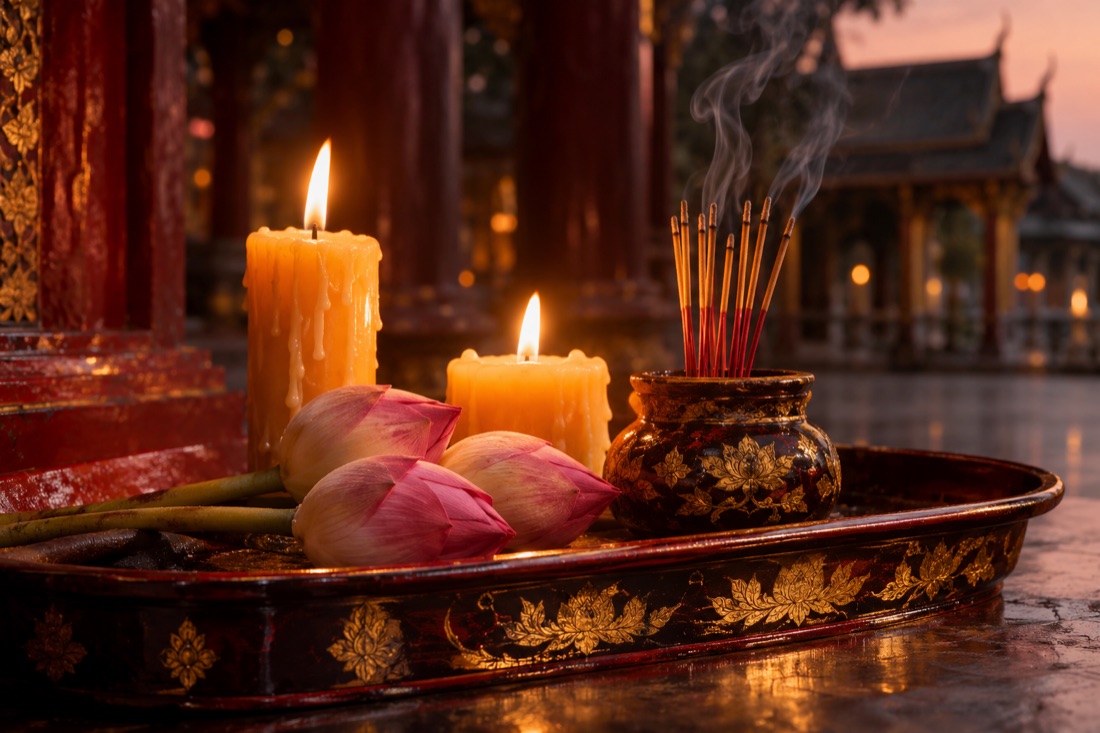
- Flowers represent the impermanence of life: they bloom and then fade.
- Candles represent the light of wisdom.
- Incense represents the fragrance of virtue.
Hold the incense with palms together, bow, and place it in the designated sand tray. Leave candles in the tray provided, not on the floor, and do not leave burning items unattended. In some temples visitors press small squares of gold leaf onto a particular statue as a way of making merit. Do this only where it is customary, and never touch the sacred object itself with anything but the leaf.
Offerings are not required. A quiet visit, a donation, and respectful behaviour are as meaningful as a purchased set. If you want to go beyond giving and learn how monks teach, meditating at a wat explains how guests can practise alongside them.